
Booking a first dry needling appointment can bring up a lot of small questions. What will they ask me? What should I wear? Will it hurt, and how will I feel the next day? This article walks through a first session at our Murdoch clinic, step by step, so you know what to expect and what to ask.
Short answer: Your first visit starts with questions about your health, medicines and the pain you want help with, and the risks should be explained before any needle is used. During needling, a brief pinch, a dull ache or a muscle twitch can happen. Afterwards, muscle soreness, minor bruising and tiredness are common and usually settle within a few days. Contact your practitioner if pain is severe, symptoms persist or you notice signs of infection.
Summary of the Content:
- Your first visit includes questions about your medical history, medicines and supplements, the areas where you have pain and your treatment goals.
- The Australian Institute of Sport says dry needling should not occur unless the risks have been explained to and accepted by the patient.
- Soreness at the needling site usually subsides within 24 to 48 hours.
- If you feel you are about to faint, lie down with your legs raised until the feeling passes.
What happens before the needles?
Your first visit begins with an initial consultation. Our dry needling process page explains that your practitioner will ask about your medical history, including previous injuries, surgeries or chronic conditions, and about any medicines or supplements you take. You will talk about where you have pain or discomfort and set goals for the treatment together.
Our safety and side effects page notes that dry needling is not suitable for everyone. Tell your practitioner if you have a bleeding disorder, a skin infection, a strong fear of needles or a weakened immune system, or if you are pregnant.
This is also the time for consent. The Australian Institute of Sport’s dry needling guidelines say consent must be voluntary and informed, and that dry needling should not occur unless the risks of the procedure have been explained to and accepted by the patient. You can ask questions, take your time and say no.
If you want to prepare questions in advance, our article on consent and risk questions before dry needling sets them out.
How should I prepare on the day?
A few simple steps can make the appointment more comfortable. Our process page suggests:
- Have a light meal or snack a few hours before, which helps prevent dizziness or light-headedness during the session.
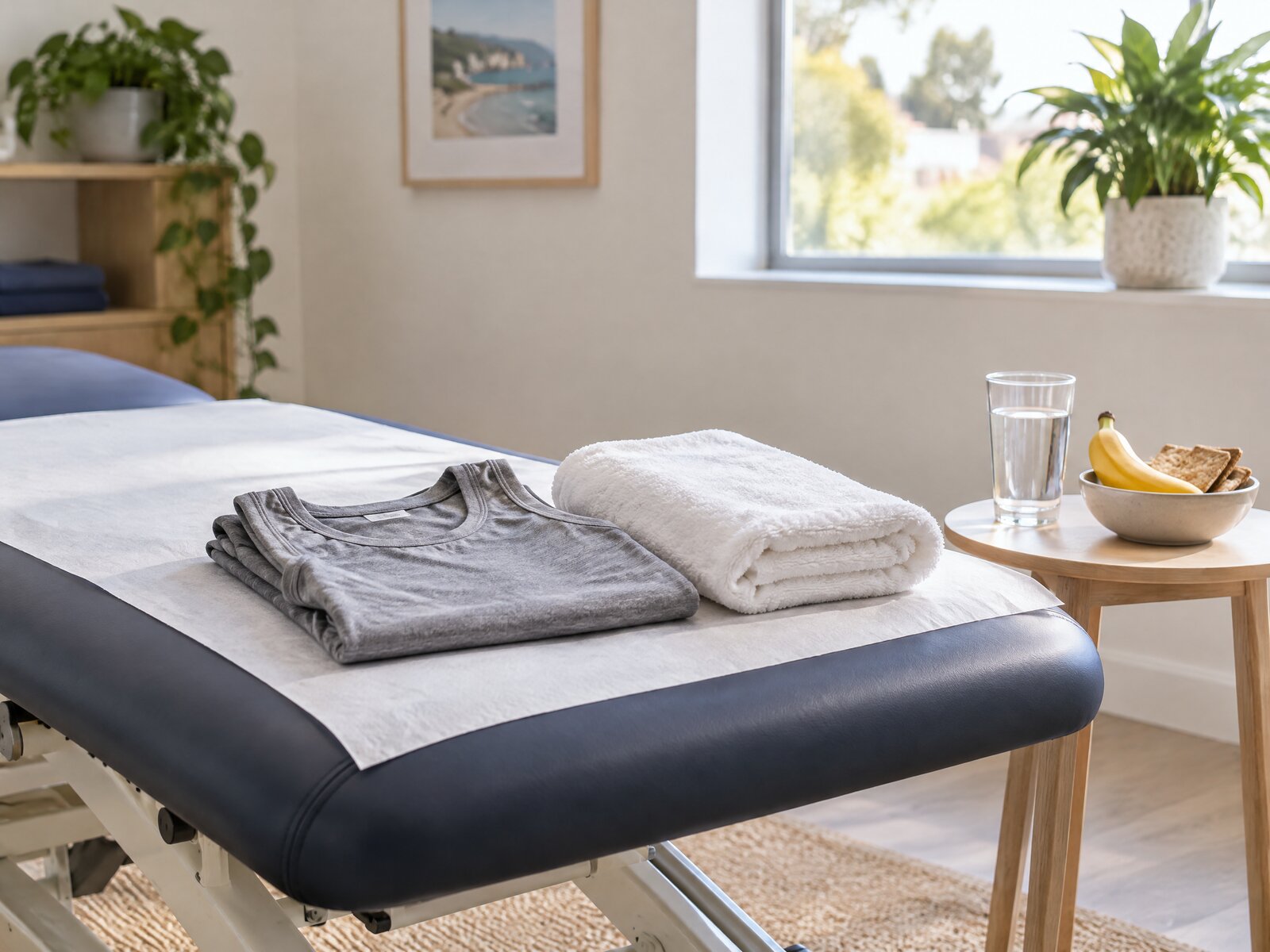
- Wear loose, comfortable clothing that gives easy access to the area being treated, such as shorts or a sleeveless top.
- Arrive a few minutes early to complete any paperwork and settle in.
- Follow any advice your practitioner gives you about your medicines.
Tell us how your pain has been since you booked, including anything that has changed.
What does it feel like during the session?
Sensations vary from person to person and from one area of the body to another. Our process page describes a brief sensation of discomfort or a slight pinch as the needle goes in, sometimes followed by a dull ache or pressure in the muscle.
A local twitch, an involuntary muscle contraction, is a common response. Some people also notice warmth or tingling around the needle site.
Tell your practitioner straight away if anything feels unexpected or too uncomfortable, so the treatment can be adjusted or stopped. You can read more on our page does dry needling hurt?
Some people feel faint during or after needling. Fainting is a rare side effect listed on our safety page, and healthdirect advises that if you feel you are about to faint, you should lie on the ground with your legs raised until the feeling passes. Let your practitioner know immediately if you feel light-headed.
What should I expect afterwards?
Our safety page lists the common effects after treatment:
- Soreness at the needling site, which usually subsides within 24 to 48 hours.
- Minor bruising where small blood vessels are punctured, which usually fades within a week.
- Tiredness, which usually subsides within a day.
Our process page suggests resting, avoiding intense exercise and heavy lifting for 24 to 48 hours, keeping up light activity such as walking or gentle stretching, and using heat or ice as your practitioner advises. Our article on managing soreness after dry needling has more detail.
When should I contact someone?
Contact your practitioner if you have severe or prolonged pain that does not improve, or if bruising, soreness or tiredness persist beyond a few days without improvement.
Seek medical advice if you notice signs of infection at a needle site, such as spreading redness, swelling, warmth, discharge or a fever.
The Australian Institute of Sport notes that risks such as induced pneumothorax (a collapsed lung) are classified as rare but are still a concern. Healthdirect lists sudden, sharp chest pain on one side that is worse when breathing in, and shortness of breath, as common symptoms. If you have trouble breathing or chest pain, call triple zero (000) for an ambulance.
What happens at later visits?
The AIS guidelines state that evidence in the effectiveness of dry needling is limited, and that the benefit-to-risk ratio needs to be considered. That is why it helps to agree at the start how you and your practitioner will check whether treatment is helping.
Our process page suggests keeping a simple record of your pain levels, stiffness and daily activities between sessions and bringing it to follow-up appointments, where your practitioner reassesses you and may adjust the plan, including how often you come in or whether other therapies are recommended.
Sources
Sources checked 17 November 2026. This is general information, not an assessment of your condition.
- Impact Dry Needling: Dry needling process and Safety and side effects.
- Australian Institute of Sport: Dry needling guidelines, for sport-related physical therapies.
- Healthdirect: Fainting, last reviewed December 2023.
- Healthdirect: Pneumothorax, last reviewed March 2025.
Final Thoughts
A first dry needling session should never feel rushed. Bring your health history and medicines list, wear clothing that suits the area being treated, and ask about the risks and how progress will be checked before you agree to start.
Impact Dry Needling & Technology is at Tower C, Level 4, Suite 404, 44 Barry Marshall Parade, Murdoch WA 6150. Call (08) 6148 8266, contact the clinic or use our online booking page. You can read the full dry needling process on our site.